
A CONVERSATION WITH... CHINACHINACHINA
chinachinachina’s debut album, dive in / breathe out, blends dream rock with contemporary R&B, subtle electronic textures, and flashes of jungle and drum & bass, building a sound that feels expansive, intimate, and quietly bold.
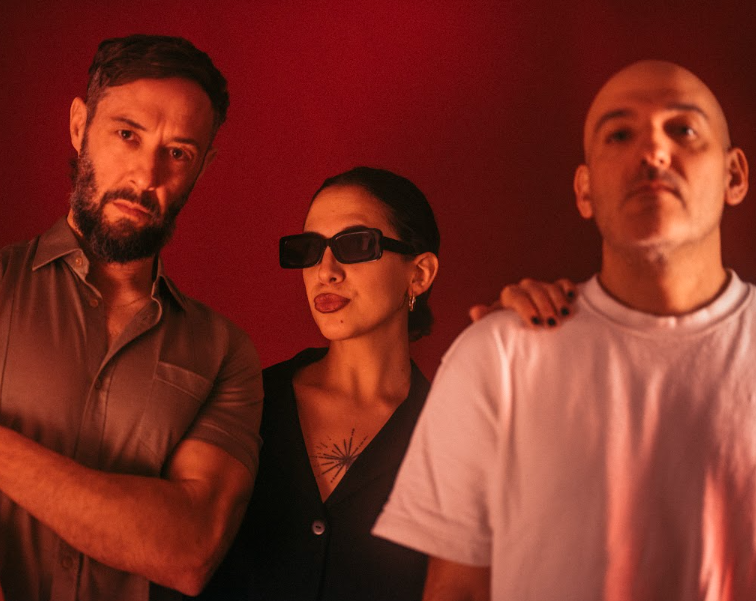
Can you walk us through the moment chinachinachina was born as a project? How did your individual musical paths converge to create this trio?
Our project was born very naturally from friendship, deep respect, and the mutual admiration Javier, Juande, and I have for one another. I had previously been in a band called Uniforms, where my voice was often tucked away behind heavy layers of guitars and effects. Javier was the one who pushed me to finally take these songs out of the drawer where I had kept them hidden. When we joined forces with Juande (after Javier convinced him in a non-disclosed conversation late New Year's evening), we realised we had created an unexpected "sound machine" that allowed me to finally step into the spotlight.
Málaga isn’t often highlighted as a hub for alternative music. How has your city shaped your sound or approach to music?
Living in Málaga has given us the precious freedom to create without feeling the pressure to follow the trends of the major music scenes. People often tell us that "we don't sound like a band from here," and while we do have a very international focus, our emotional connection to our home is absolute. Málaga is the place for a lot of urban artists, but also for flamenco, rock, pop... is an amazing creative hub, where the 'usual' is to mix influences, as the city exhales the mixture of different civilisations from thousands of years of history.
How do you navigate the balance between individual expression and collective decision-making when creating music together?
Our dynamic is built on what we call "melomaniac eclecticism," where we blend our shared love for dream pop, R&B, and jungle. I usually bring the lyrics and the basic melodic structure on the piano; Juande then adds that incredible dynamism with his jungle and R&B-influenced rhythms, and Javier adds layers and melodies, navigating between beauty and chaos. Despite our different backgrounds, our goal is always the same: to make the songs beautiful and to awaken a real, deep emotion in whoever is listening.
dive in / breathe out is structured in two interconnected movements. How did you decide which songs would belong in "Dive In" versus "Breathe Out"?
The structure of the album actually mirrors my own vital arc. Dive In is the collection of experiences that take you to the very bottom, where you get stained with mud and have to learn from hard, painful mistakes that leave a mark. Breathe Out represents that vital moment of surfacing, seeing the light again, and finding the strength to move forward. Our live shows reflect that arc very clearly.
The album captures a full emotional arc: sinking, learning, surviving, exhaling. Was this journey autobiographical, fictional, or a mix of both?
This journey is completely and deeply personal to me. Many of these lyrics were never meant to be heard; they were songs I only turned to when I needed to connect with my own essence in the dark. The album is my way of transmitting real suffering, but more importantly, it’s about the inevitable growth that comes right after it.
Annie has mentioned that many of these songs were initially private. What changed when you decided to share them collectively as a band?
The biggest change was Javier’s persistence. If he hadn't pushed me to share these themes and develop them as a team, they would still be locked away in my room. After he listened to the demos, he came back with guitar loops, bass lines, percussion... and they shocked me, he saw something I wasn't able to imagine before. Sharing them changed everything; they transformed from secret, intimate confessions into a global proposal of dream rock and sophisticated electronics. The songs gained an ambition in their production and scope that I never could have given them on my own.
Your sound blends dream rock, contemporary R&B, subtle electronic textures, and even hints of jungle and drum & bass. How do you approach integrating such diverse influences without losing cohesion?
For us, cohesion comes from one place: the search for beauty above any specific genre. We aren't afraid to take an iconic Sade song and infuse it with jungle rhythms, as we did with ‘No Ordinary Love,’ because beauty is our only compass. Working with producers like John Foyle (who worked with FKA Twigs) and Mucky (who worked on Sevdaliza's "Alibi") was essential to giving all those different textures a professional and cohesive sound, even with styles that could seem far away from each other.
Critics have compared your sound to London Grammar, Darkside, The xx, and others, but you clearly carve your own space. What does “originality” mean to you as artists?
We find those comparisons to London Grammar or The xx incredibly flattering because we love those artists, but for us, originality is just about being authentic. We believe people can smell a lack of authenticity from miles away. We decided to take a risk with a proposal that is very far from what the current market dictates or what is "fashionable" right now.
Silence and space are integral to the album’s arrangements. How do you approach creating “moments of stillness” within sonically rich songs?
We are always looking for that delicate balance between power and softness. We think of our music as expansive "sonic landscapes" where my voice needs air and silence to breathe among Javier’s layers and Juande’s rhythms. In our world, silence is just as important as the notes themselves, as the root of the songs comes from inner thoughts, moments of loneliness, and individual experiences.
How did working with John Foyle and Mucky shape the album’s final sound? Were there moments where their input took the songs in unexpected directions?
Their impact was absolutely decisive for the "international" feel of the record. They helped us remove "quality" as a limiting variable, allowing us to focus entirely on the emotion of the tracks while they handled the sophisticated texture we wanted. The process was amazing, sending tracks back and forth thousands of miles away from each other, watching the song’s growth with every conversation, with every new track we recorded... It was an incredible learning experience for us.
With such detailed production, do you ever struggle between keeping a song raw and intimate versus fully polished and layered?
It is a constant, daily struggle for us. Even though the album sounds impeccable because it was worked on in places like Abbey Road Studios, I always fought to make sure the lyrics still hurt. We wanted a sound that was sophisticated and "global", but that never lost that "heart-wrenching" and intimate essence that makes these songs feel like a confession. Then, when we hit the stage, the songs transform themselves into a less-polished, more raw and visceral version of themselves. We three also transform ourselves.
Vulnerability seems central to dive in / breathe out. How do you maintain emotional honesty while crafting songs intended for public release?
The only way to do it is by being completely transparent throughout the entire process. In tracks like "skin," I’m talking about shedding my own skin to be forgiven and letting go of guilt. I don't try to hide my suffering; instead, I use the music to release it. That honesty is what makes the songs create a way to connect with the listener, or at least that is what we expect.
Can you share a specific lyric or song from the album that feels most personal or transformative to you, and why?
‘Blind Eyes’ is so vital to me because it’s the moment I can finally say: "Now I could tell / That I've seen the light." It summarises the entire shift in my life after being "blinded" by insecurities. I also have a very soft spot for ‘Forget Me,’ because it was the first song the three of us worked on together—it was the spark that told us this trio was something special.
You deliberately step away from market trends to create something timeless. In today’s fast-moving music industry, what does “timelessness” look or feel like to you?"
To me, timelessness means giving something all the love and resources you possibly can, so it becomes a unique piece of art that can be enjoyed no matter the time or place. We treated this album as if this breath were our very first and our very last. It’s about creating something that you can listen to in ten years, and it still touches your heart, regardless of whether dream pop or jungle are "in style" at that moment.
Looking ahead, what do you hope listeners take away from this album, not just emotionally, but in terms of how they experience music in their own lives?
I truly hope this album can be a companion for people during their own dark moments. I want it to help them find their own "breathe out." We want the album to be a hypnotic experience that traps you in its complexity, but most of all, we want it to be something that makes you feel a little less alone.