
A CONVERSATION WITH... GATLIN
We’ve all had a piece of her for seven years as Gatlin, but with the release of her album The Eldest Daughter, she’s letting us meet her where she’s at.
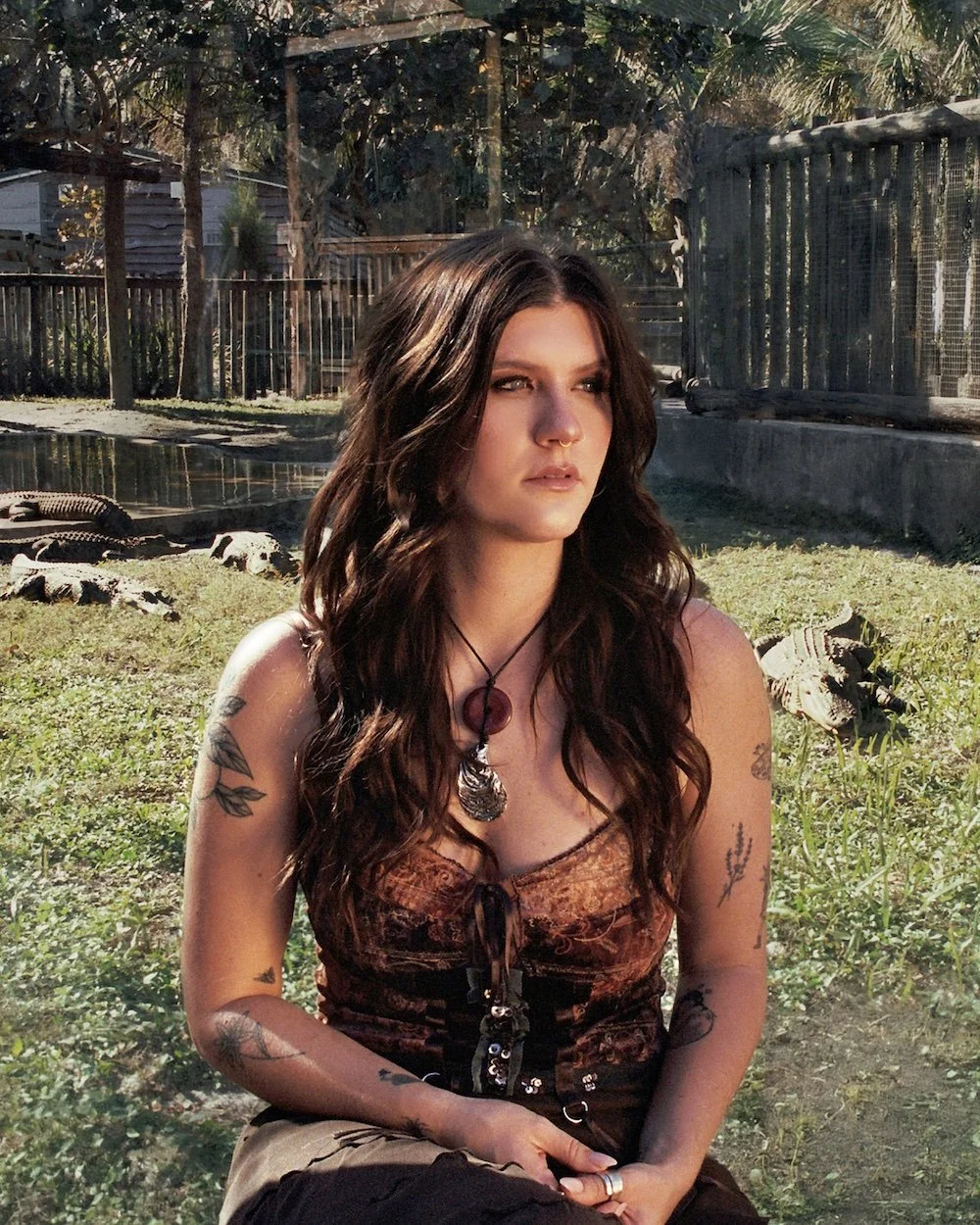
Picture by Luke Rogers
Ask any queer person who grew up with a complicated relationship to God and they’ll tell you something different about the Big Guy Upstairs.
Some slam the door on religion, accessing the part of their Christian upbringing only when they need to remember some niche fact. Others reconcile with it, finding parts of it that they love and parts that need some polishing before they see the sun again.
For Florida native Gatlin, they’ll create The Eldest Daughter.
She peels back the layers of perfectionist suburban landscapes, twisting guilt and fighting through shame, and the audience gets to meet her where she is now.
“I'm ready to explore more of the angry side. I don’t want to apologise for my anger. I really realised over the last three months that my anger would manifest as sadness. As a woman, we’re told not to be loud and expressive, you know? I grew up getting in trouble for being angry, even if it was just justified. So like with “Jesus Christ and Country Clubs”, I found myself cowering at times or apologising after putting it out. It received some backlash from family, people from my old community, or even strangers on the internet and that side of me was coming out. But now I just really want to push myself to explore unapologetic music.”
So after pushing through the years of hiding herself, what does unapologetic mean for Gatlin? As she explains, it’s an area she’s slowly discovering while still making music that feels true for her, and hopefully, those who listen. She’s always been on the line between fully vulnerable and commercially desirable, but regardless, her music has contagious hope that fulfils her and her audience. The Eldest Daughter has so much of that hope and openness she’s been pushing for.
“Songs like ‘If She Was A Boy’ are more of a fun, dance-pop, song. It's fun to play in the car. And I think it reaches more people because they’re universal and easier to listen to and make you feel good. I love that. And then there's the songs that are fun to play live, like ‘Jesus Christ in Country Clubs’. They’re very empowering and they're less vulnerable, but they still fulfil something within me. Then the vulnerable ones, like ‘LOVE ME’, feel more for me and maybe other people identify with it. But sincerely, don't listen to those all the time. Like, you don't need to be crying all the time.”
Take it from the songwriter herself, don’t listen to her sad songs all the time. She’s even dipping her toe into writing rock music, as it’s one of her favourite things to play live and lets her really express her pent-up emotions.
“It all started when I was a teenager, being 15 and having big feelings. That's kind of when anxiety and depression stepped in for me and writing was the outlet for that. Like, ‘LOVE ME’ that I just mentioned, it was about my mental health crisis and having to go receive psychiatric help. It was one of the hardest songs I’ve ever written. But I can look back at that and see how hard and rewarding it was to write it. And with that, and Eldest Daughter, I felt like I had to do it in order to write anything else. I stopped filtering myself, I let myself swear, and now I feel free to make whatever and say whatever I want.”
Beyond being freeing, it made being an artist exciting again for her. Being a professional artist for seven years means she was hitting some walls with her artistry. Not that it would show in her lyricism or joy for music, but internally, she was searching for something to renew that spark within her.
“I really was asking myself, ‘Am I growing? Am I still enjoying this still?’ And it brought on this time of me learning again. Learning for fun! Like, it never really crossed my mind, when I was like 20 to learn how to produce. I don't really know why, but it just never did. It was just always something that I told myself I couldn't do, that I'm not good enough to do that. I think it proved to myself that I could do something new and I could learn how to do it. It brought a new joy and excitement to make music for me.”
It’s not stopping there for her though, and why would it? Gatlin kept emphasising how she wants to go into this new chapter and jump into anything that she can. “I want to be in a studio more and learn all of the things that I can. I want to write for other artists more. I want to expand and maybe even learn other art forms. I've been drawing more, scrapbooking, and doing film photography. I think I need to be feeding other things and other aspects of my creative self. I really like the idea of growing with someone in a creative bond. I don't know when the time for that is, because I want to invest in that, but it’ll happen at some point. You know, that kind of dynamic like that Amy Allen has done with Sabrina Carpenter or what Dan Negro has done with Olivia Rodrigo and Chappell Roan. That is just such a special thing. I've always wanted that for me as an artist and I haven't quite found that yet.”
That drive for everything creative and musical is something deeply intrinsic, as Gatlin’s been discovering through her ketamine therapy. As she unravels parts of her life, especially parts that have been subconsciously protected, her drive to create music grows stronger and clearer. “In every journey with my therapist, I always go to how deeply musical I am and how that's a core belief and a core thing I know about myself. It moves me. It's part of my essence. It feels like it's something I must do. Even in times when it's been harder to make music or I'm beating myself up about where my career is, I think returning to that idea that, man, even if nobody listened to my music, I would still have to do this.”
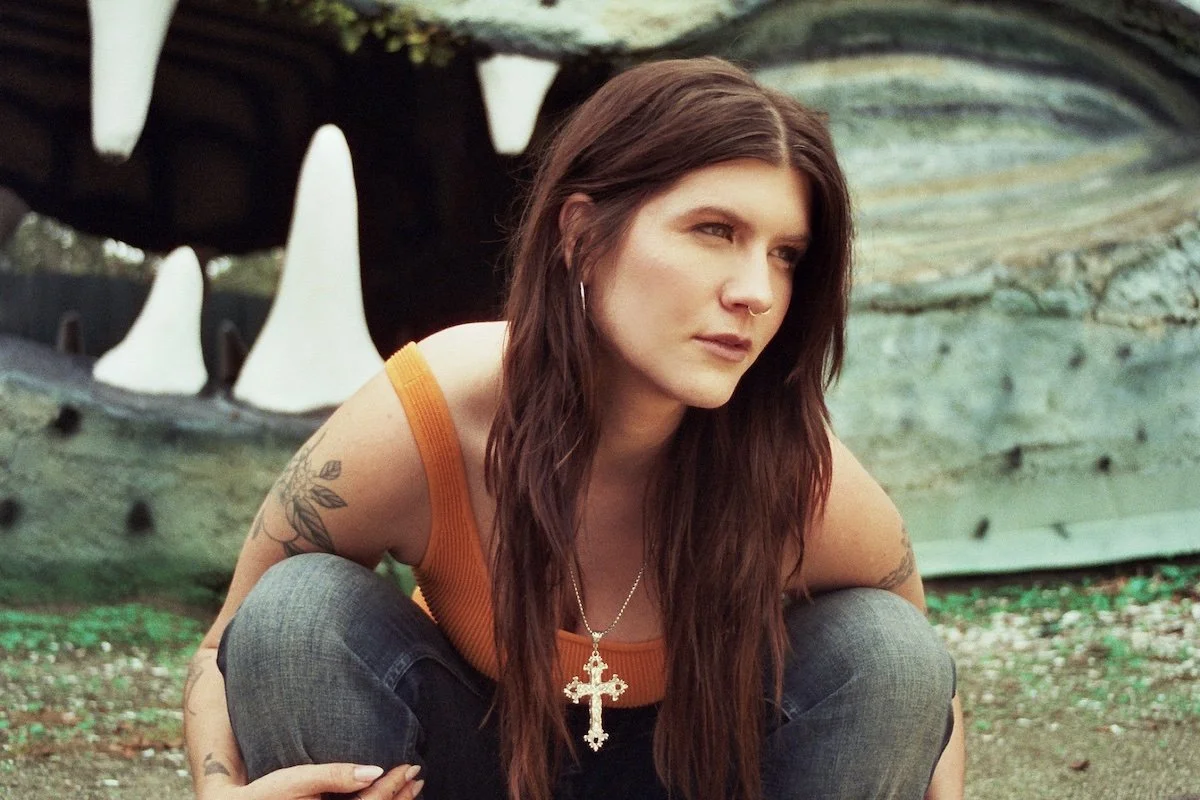
Picture by Luke Rogers
That’s really clear with The Eldest Daughter, but also with her latest EP Pipe Dream, which is a new collection of her older songs. It’s almost like Gatlin’s musical scrapbook: piecing together parts of her twenties that she finally sees the connecting threads between. “I'm 27 and a lot of those songs were from 20 to 24 that I put out. So like early 20s versus late 20s, it felt very much like a before and after. ‘Pipe Dream’, points directly to ‘What If I Love You’, while ‘If She Was A Boy’, points directly to ‘Never Been In Love’, and ‘Florida Man’ directly to ‘2000 Miles’. A lot of people experience that craziness going through their 20s, so it's just my vision and version of that. It's a nice little guide.”
But if you don’t find her in the studio, scrapbooking, or learning some new creative outlet, you can find her nerding out with her friends. “Nobody really asks about it, but I’ve been really into playing this boardgame, Blood on the Clocktower. It’s still the nerdiest thing that I do, and I love it. It’s not quite like D&D and a bit more like Mafia or Traitors, the TV show. I play with the same group every time and I love it. I'm obsessed with it. There's a storyteller every night, so you change characters, but each character has a different role so you get really into the good versus evil.”
Take that as a sign things really can get better.