
A CONVERSATION WITH... STATUS/NON-STATUS
At The Great Escape, we caught up with a collection of Canadian artists! Get to know the is the ever-evolving project Status/Non-Status led by Anishinaabe artist Adam Sturgeon.
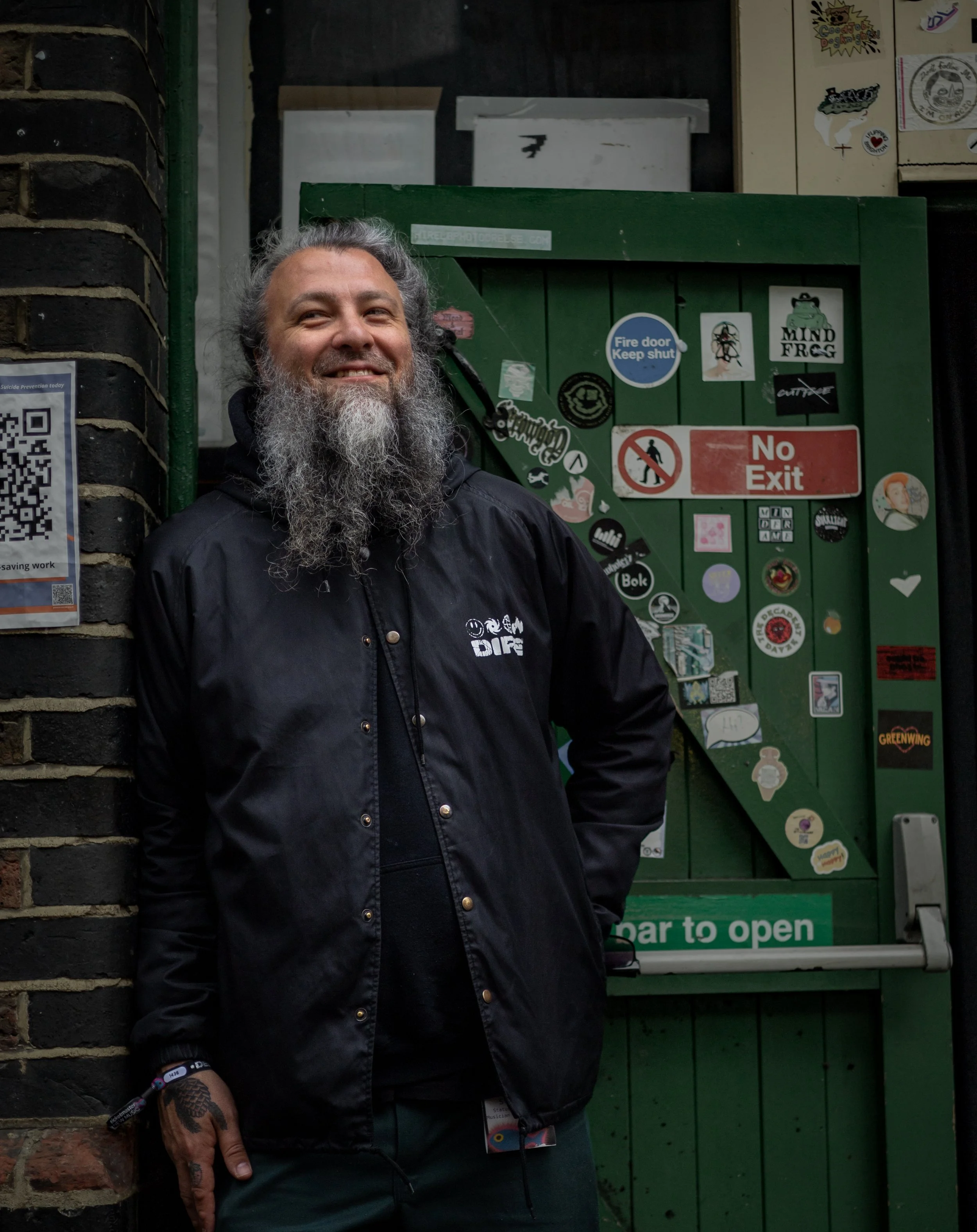
Photo by Imogen Mosley
I'm Adam from Status/ Non-Status. In Canada there's this thing called the Indian Act, and it impacts Indigenous people, and if you have “status”, you fall under this policy, which is quite frankly a genocidal policy, and it creates an apartheid system. My family, we don't have our treaty rights, so we're technically “non-status”, and so as much as that policy is not great, to not have our rights is also not good, so this name is to say like, if we are Indigenous, we are Indigenous. That’s our history, as much as they try to hide it.
absolutely right. If people were to listen to your music, what would you say makes a ‘Status/Non-Status’ song? What is that through line?
I think that we're pretty authentic, you know. We do a lot on our own, or work with people that we're intrinsically connected with, and we've been doing it for a long time. As much as we've been able to teeter through many different genres and scenes over the years, we've always been just left of that. It's a kind of grunge music, maybe a bit sophisticated grunge, because we like progressive rock. Wouldn’t it be easier if we called it rock music? I'd say so, but sophisticated grunge has a ring to it. There is a temperature for people to gain awareness, and art and music is such a soft blow. They're really healthy confrontations. So I think that a lot of the music is about healing, or about our past, and it's truth bombs.
Is that where you feel most comfortable with the music, that nice truth bomb? Or would you rather go down a different path?
I don't know. As an Indigenous person, you wear that weight on your shoulder.
There's lots of music that I like that doesn't have a vehicle of culture per se, you know, but there is just that weight that we wear that we cannot escape. So, I don't know, I think it's intergenerational trauma, but it's very healing. It's very healing. You know, even when it's negative, it's about confronting it in a good way.
With this music, do you guys all write it together, or are you more the sole songwriter?
I spend a lot of time by myself, writing and pondering. But this new record that we put out called Big Changes, it was recorded at home, and every Monday we would get together, and I would put a song structure on a whiteboard, and we'd work out the details. I’d have had an idea, but I would introduce the song fresh, and we would record it in the moment.
Have you done that before for your other releases or is that a new style?
In a way. We worked with Kevin Drew from Broken Social Scene on an album with this band, OMBIIGIZI, my other band, and it was very in the moment. We had prepared a few songs, and when we got to the studio, we had changed our mind on recording any of those. We’d play a song and he’d pick out a little part and work from there.
There were days where we'd have three songs in a day. It was about embracing the trust of yourself and your collaborators. Sometimes two notes is better than three.
Is there any line or part of any song in Big Changes that you’re proud made it in?
I find that I'm very repetitive and juxtaposed, so sometimes I will jumble the words live, because I'm forgetting what's what. But, the album's called Big Changes, and the chorus is “Big changes are coming.” That's pretty simple and there's more complicated ones, but I think that that one sort of leaves something on the table right now.
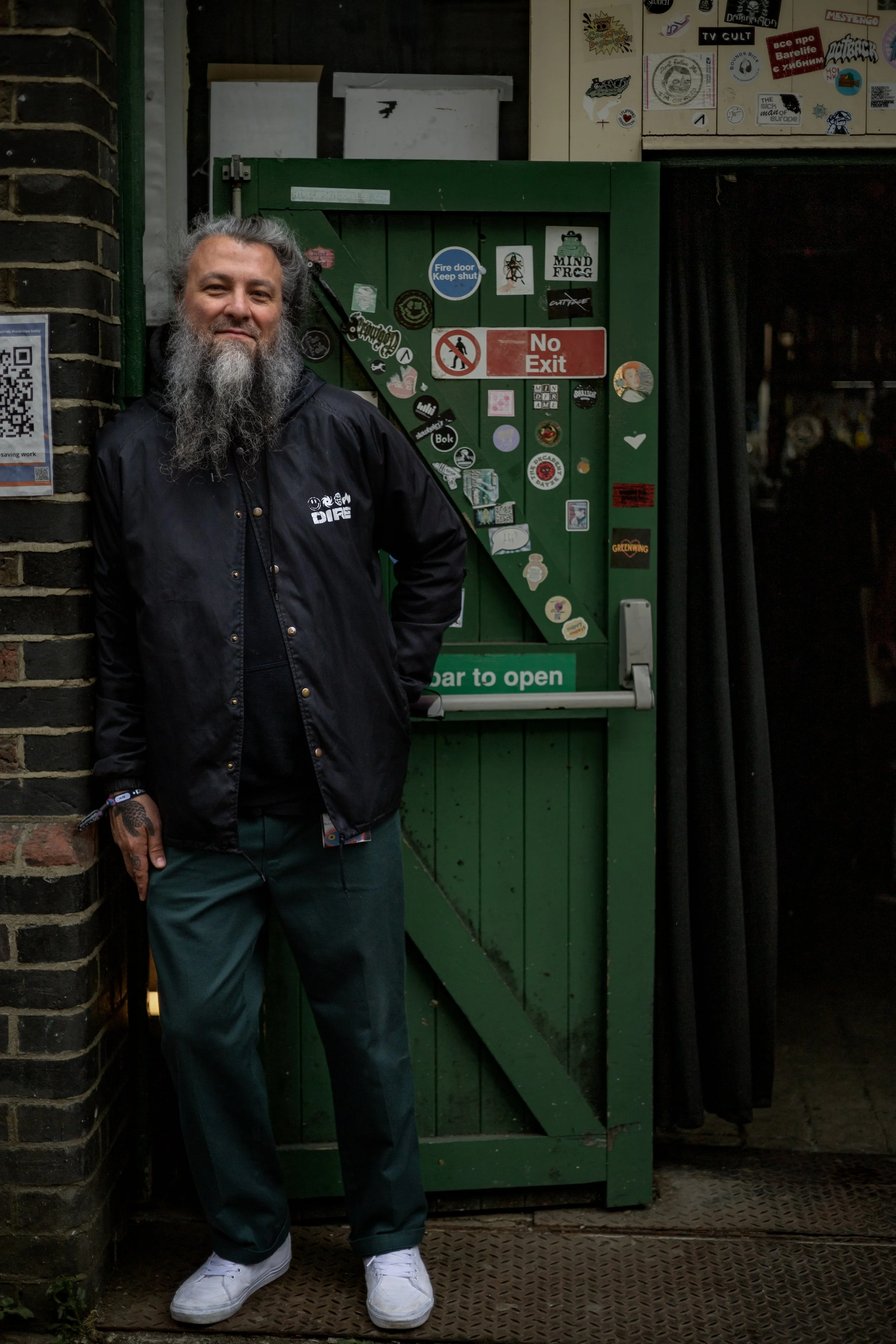
Photo by Imogen Mosley
What are those big changes that are coming?
I would describe it as what's happening in my neighbourhood. Walking out my front door and experiencing all of it. That’s why those Monday mornings were so good for us, because we were sheltered. Because when we walk out of that door, things are not awesome. We're from London, Ontario and it's not in a good place. Bad affordability, housing, addiction, poverty, all those things are really real. We see suffering everywhere we go. My wife, my kids, my bandmates -- that's what we're experiencing on the daily. And it's not right. With saying that, we're witnesses. So it’s asking what can we do to be a part of the change, I guess? There's a lot of question marks with that album title.
There's so much construction going on. So, our town is smothered with these signs that say ‘Big changes are coming to King Street’, or whatever. So, it's a London, Ontario record. Different than a London, England record.
Speaking of England -- Great Escape. How are you feeling about performing, especially being alongside all these other Canadian bands and organisations?
You know, it's really awesome. Sometimes I maybe feel critical of the idea that all the Canadians got to get together. But actually, there's such a wide catchment of amazing art in Canada that it is actually really cool to congregate together.
It feels like Great Escape has done an amazing job of connecting Canadian artists locally.
I do also want to see this band Bonnie Trash from Guelph, Ontario which is sort of one of my hometowns as well. They're just amazing, amazing people.The music is very interesting. It's incredibly dark. It's got culture and family.They're the number one band that I want to see this weekend, even though I could probably just drive down the road to see them. I got to shout them out.
You got to shout them out. Are there any Canadian or otherwise acts that you'd also want to collaborate with one day, either writing-wise or tour-wise?
We're actually talking a little bit about doing that with Bonnie Trash. So, we'll see. Collaboration is amazing. What I'm noticing about a lot of young bands in the scene back home is the genre bending is more alive than ever. Sounds that you would never have put together are now being melded. You know, as a rock band guy, sometimes I don't know if I'm doing anything new here. So, I think something new will come of that. I'm excited for the young people making music. Maybe I'm just old. I'm good old, though. I actually go to shows with my son, my oldest son. He's eight years old. There are moments where it's like, ‘oh, he's closer in age to this band than I am. He's so hyped on it. It's just so exciting to watch kids these artists doing something that maybe as a young child you think that you can maybe do, too. Right? It doesn't feel impossible.
That’s really what kids need -- to see that the world is their oyster, too. Has your son come to any of your shows too?
He's super into it, super supportive. We have a studio at the house so my kids are playing drums, banging on the piano, smashing on the guitars, and doing the whole thing. I think any time you expose kids to music, they're going to flourish with that. I grew up more in an athletic household, so there wasn't a ton of music. I'm really thankful that our house is loud.
what's something in your music career that you are quite proud of and thankful for that you'd like to talk about?
I had an album that was nominated for a Juno and an album that was shortlisted for Polaris. It was called Sewn Back Together. It was really one of my first forays into a true Indigenous collaboration.
And since that time, I've been able to continue down that pathway. So I really feel like that gave me that push to pursue that for myself. It was really beautiful that people were so responsive to something that does exist sort of outside of the lines of conformity and popularity.
A bit left field for you, but what's a question you wish you got asked in your interviews but you haven’t yet?
I don't exactly know how to answer that. But what I will say is that I think that sometimes with Indigenous culture, we get painted with the same brush. There is a lot of difference and sometimes that gets lost in translation. Someone sees there's an Indigenous artist, they check the box, but they don't check out what the meaning is behind that word. And it seems like you've done your work. In Canada, there are hundreds of nations. Nations. Those are cultures and ways of life that are different from one another. My family's unique experience is just one spoke in a large wheel. I feel like sometimes that does get missed. So the great thing about all of this is that I do get the opportunity to represent it. And so I'm always thankful.
And you know, being mixed or whiteness, it's like somehow you're sometimes more palatable or something like that. You actually have to make sure that you're sharing space and continuing to look down the line of who's not being represented. But you just have to learn to love and accept yourself and using art as the tool is amazing.