
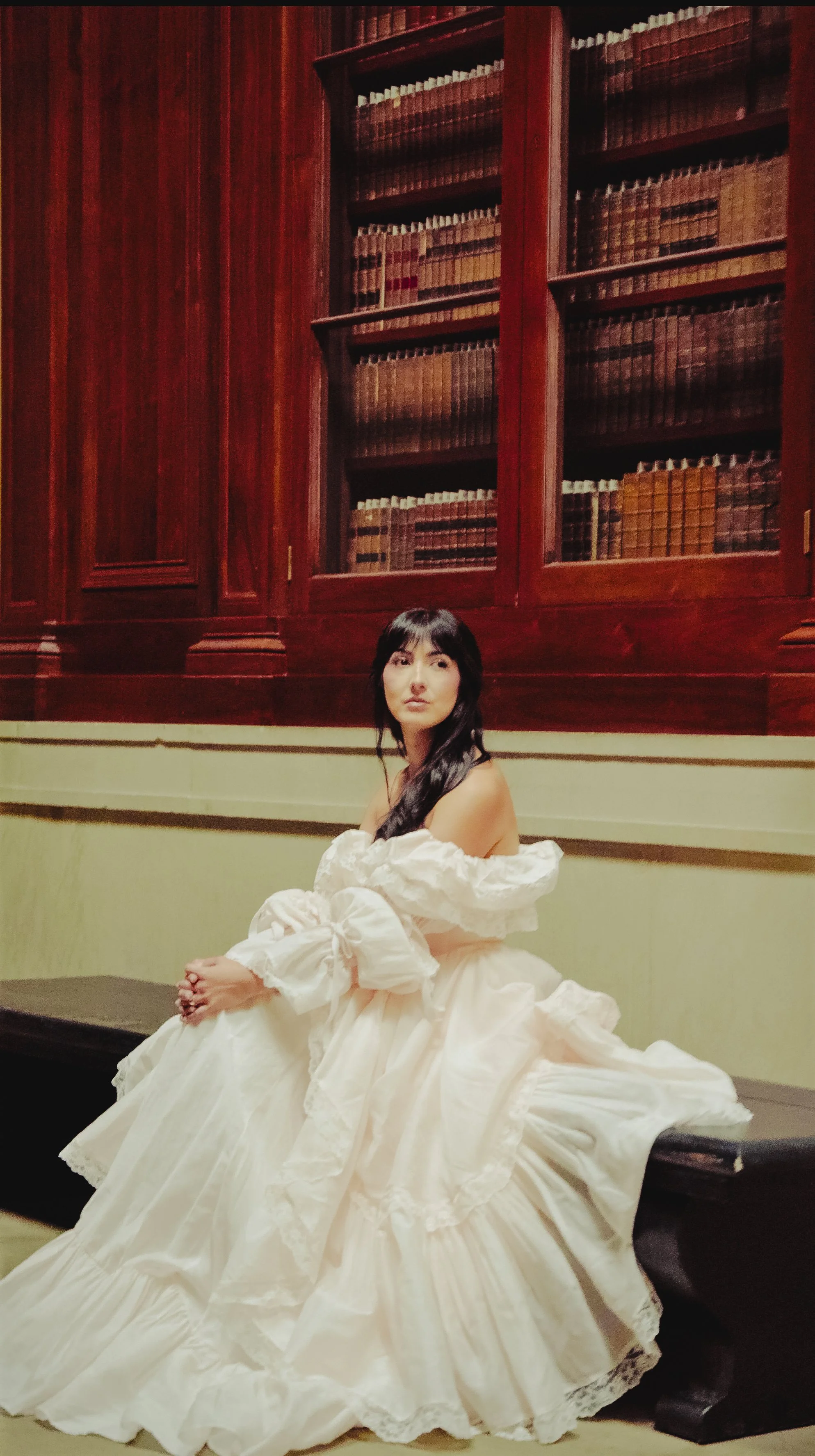
An ethereal collision of classical romanticism and electronic experimentation, Adieu Anaïs transforms the subconscious into a world of its own, where dreams become declarations of freedom and finding yourself is the ultimate act of rebellion.
Some records announce themselves with an immediate sense of reinvention, while others invite you into a world that gradually reveals its meaning. With her self-titled debut EP, Adieu Anaïs, the latter feels particularly fitting. Across four tracks, the emerging artist constructs an immersive landscape where electronic experimentation, dream pop and classical romanticism intertwine, creating something that feels as emotionally expansive as it is sonically adventurous. Rooted in a deeply personal experience of losing and ultimately rediscovering one's identity, the 13-minute collection is an exercise in transformation, exploring the delicate space between who we become, who we leave behind and the person we are still capable of becoming.
What makes the project particularly compelling is the deeply personal story underpinning its creation. Inspired by a vivid dream Anaïs experienced more than a decade ago, the EP takes its conceptual direction from a surreal encounter between her present self and the child she once was. Wandering through a dark forest with chains around her ankles, she eventually discovers a glowing cave filled with colour, music, orchestral grandeur and dancing figures. Inside, she finds her four-year-old self completely absorbed in the joy of music. As she prepares to leave, the conductor calls out, "Adieu Anaïs!" before she returns to the darkness. It is an extraordinary image, one that captures the distance between who we become and who we once imagined ourselves to be. More importantly, it becomes the foundation for a musical journey that refuses to accept that distance as permanent.
Opening with ‘Darker Places,’ Anaïs immediately establishes an atmosphere of unease and introspection. Ambient electronics create an immersive sonic environment, drawing the listener into the emotional uncertainty at the centre of the record. There is a wonderfully atmospheric quality to its presentation, with the production allowing tension and vulnerability to occupy the same space. Rather than approaching the subject matter through straightforward lyrical exposition, the track feels concerned with communicating an emotional state through texture, atmosphere and sonic movement. It is the sound of being somewhere you no longer recognise, caught between the familiarity of the past and the uncomfortable knowledge that something needs to change. As an introduction, it provides an effective sense of the darkness from which the remainder of the EP will gradually emerge.
That sense of movement becomes particularly interesting on ‘My Own Cave’, where the production begins to embrace a more experimental and playful character. Drawing upon hyper-pop sensibilities and electronic soundscapes, the track introduces a brighter perspective without abandoning the emotional complexity established by its predecessor. There is a fascinating contrast between the vulnerability of its central concept and the increasingly adventurous sonic palette surrounding it. The cave, in this instance, becomes something much more than a place of escape. It represents the inner world, the imaginative sanctuary that exists beyond external expectations and the compromises that can gradually diminish our sense of identity. Anaïs approaches this idea with an appealing sense of creative freedom, allowing unexpected electronic elements to illuminate the track's underlying message. It is a moment of rediscovery, suggesting that the person we have been searching for may never have disappeared in the first place.
Perhaps the most distinctive moment arrives with ‘Play Me Chausson’, a track that brings Anaïs's classical training into particularly exciting territory. Inspired by French Romantic composer Ernest Chausson, whose music made a lasting impression during her university studies in classical opera, the composition explores the relationship between orchestral expression and contemporary electronic experimentation. There is an undeniable ambition to the concept, with the grandeur and emotional intensity associated with classical romanticism meeting more disorientating, electronically driven textures. Rather than treating these influences as opposing musical languages, Anaïs finds common ground in their shared capacity for emotional expression. The result feels theatrical, expansive and wonderfully unconventional, capturing something of the orchestral celebration described in her original dream. It is also a reminder of the depth of her musical background, demonstrating how classical technique can become a foundation for genuinely adventurous contemporary songwriting. Among the EP's four compositions, it stands out as a particularly revealing glimpse into the possibilities of her artistic identity.
By the time the closing track ‘Lose Myself’ arrives, the emotional trajectory has shifted considerably. Moving into drum and bass, Anaïs exchanges the introspective atmosphere of the earlier tracks for something considerably more kinetic and liberating. Its propulsive energy feels like the natural culmination of everything that has come before, transforming the EP's underlying tension into a decisive moment of forward motion. There is a pleasing sense of release in this final chapter, as though the chains described in the opening track have finally fallen away. Importantly, the title suggests a fascinating contradiction. To lose oneself can imply surrendering an identity, yet here it becomes an invitation to abandon the expectations and limitations that have prevented personal freedom. It is an energetic, forward-looking conclusion that leaves the listener with a sense of possibility rather than simply closure.
Beyond its musical construction, Adieu Anaïs carries an especially meaningful sense of determination. The creation of the EP follows years of personal and professional obstacles, including a lengthy legal dispute over unpaid performance fees, a departure from corporate employment and a near-death health scare in 2022 that prompted Anaïs to reconsider her relationship with music. Her eventual decision to pursue an independent artistic career gives the project an additional emotional dimension. This is not simply an artist exploring the concept of rediscovering herself through music. It is an artist actively demonstrating what that rediscovery can look like. Her classical foundations, combined with an evident enthusiasm for the experimental possibilities of contemporary electronic music, create an identity that feels both considered and refreshingly open-ended. There are echoes of the adventurous approaches associated with Oklou, FKA twigs and Caroline Polachek, yet Anaïs is clearly interested in establishing her own relationship with these sounds.
Across its four tracks, Adieu Anaïs succeeds in making a deeply individual experience feel remarkably universal. Its exploration of emotional darkness, artistic identity and the courage required to begin again resonates beyond the circumstances that inspired it. While its 13-minute runtime leaves plenty of room for further exploration, the EP feels deliberately concentrated, with each composition contributing something essential to its overarching narrative. There is a clear understanding of atmosphere, an appetite for sonic experimentation and an emotional sincerity that gives the project its strongest qualities.
With Adieu Anaïs, the artist offers more than an introduction to her musical world. She presents a statement of intent, one that embraces vulnerability without surrendering its sense of strength, and celebrates experimentation without losing sight of its emotional foundations. Each track feels like another piece of a much larger personal awakening, gradually building towards the liberation that has been waiting at the heart of the project all along. There is something particularly rewarding about hearing an artist bring together such seemingly disparate influences with a clear creative purpose, and Anaïs does so with an individuality that makes this debut feel genuinely exciting. If this EP represents the sound of finding her way back to herself, it also suggests that she is only just beginning to discover how far her imagination can take her.
Danielle Holian
★★★★☆
