THE MUSIC IS BLACK: A BRITISH STORY
The Music is Black: A British Story
V&A East
words by Cat Wiltshire
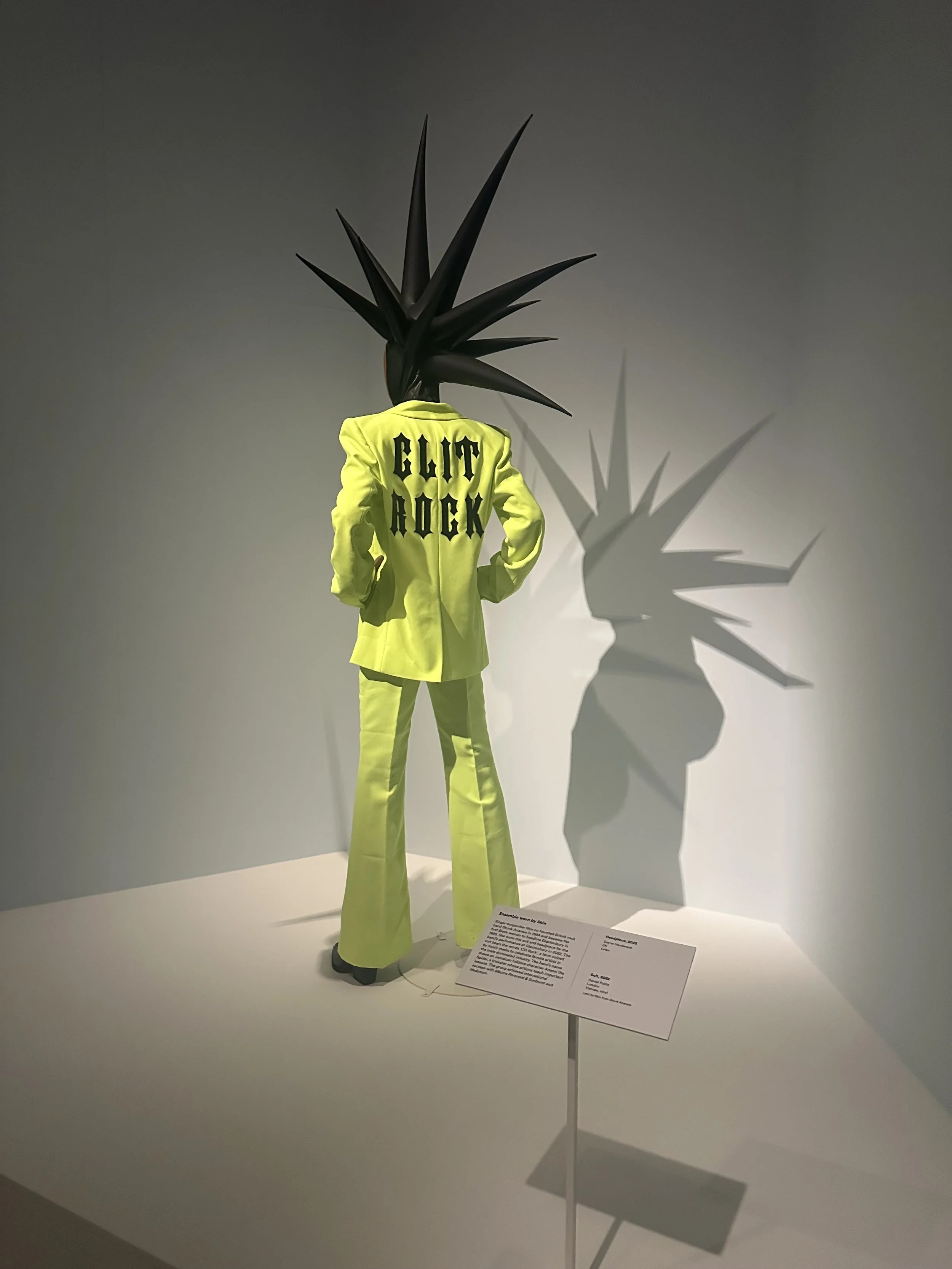
For its first major exhibition, the newly opened V&A East has made a statement that is as political as it is curatorial. The Music is Black: A British Story, which opened with the museum on 18 April 2026 in Stratford’s East Bank, surveys 125 years of Black music-making in Britain through more than 200 objects and an immersive headset soundtrack of over 120 tracks. It is an exhibition about sound, but also about memory, migration, theft, resistance, pleasure and reinvention.
That sense of scale is both the exhibition’s greatest strength and its chief problem. Jacqueline Springer, the V&A curator behind the exhibition, has attempted something enormous: not a genre study, not a tidy genealogy, but a national counter-history told through Black British music and the global currents that formed it. Official V&A material frames the exhibition as spanning four continents and tracing a story of “excellence, struggle, resilience and joy,” with music that sweeps from Samuel Coleridge-Taylor to jungle, grime and drill.
What stops that ambition from collapsing into a textbook-on-walls is the exhibition’s most intelligent device: the sound. Visitors wear sensor-equipped headsets that shift as they move through the galleries, so the exhibition is experienced not as a mute procession of vitrines but as a constantly changing sonic argument. This reactive audio design is one of the exhibition’s most effective features, and it is easy to see why. Music here does not illustrate the objects; it enhances them.
The exhibition begins, rightly, in violence. The opening section confronts slavery, colonialism and looted objects before moving into African and diasporic musical traditions. That choice matters. The Music is Black refuses the cosy museum habit of presenting culture as if it floats free from power. Instead, it insists that Black British music emerges from histories of forced displacement and racism, even as it becomes one of the great engines of modern British culture.
From there, the exhibition moves chronologically and then more associatively through styles and scenes: jazz, reggae, lovers rock, 2 Tone, jungle, garage, trip hop and grime. The object list sounds almost engineered to produce delight: Winifred Atwell’s upright piano, Joan Armatrading’s childhood guitar, Jerry Dammers’ sketches for the 2 Tone logo, JME’s Nintendo setup, Stormzy’s Banksy-designed Union Jack stab-proof vest from Glastonbury 2019. They make the case that Black British music is not a niche tributary to the national story but one of its main channels, going beyond artefacts that are just trophies.
Stormzy’s vest, inevitably, is a climax. It condenses so much of the exhibition’s argument into one image of Britishness under pressure. Patriotism, danger, celebrity, protest, vulnerability, spectacle are all present in that single object. The exhibition seems most persuasive not when it gives us the already-iconic, but when it restores less sung names and half-forgotten contexts. The V&A allows Springer to place overlooked figures and scenes inside a national museum and say, " This, too, is the story’.
With this in mind, there is no getting around the exhibition’s density; any one of its major strands might deserve a full exhibition of its own. This compression can make for abrupt transitions and crowded meanings. A survey this broad inevitably leaves some artists with too little room to breathe and some genres feeling sampled rather than explored.
You come away exhilarated, but also aware of how much has been packed into a small space. Although this can be seen as a great opportunity to do your own research into some of the great areas you will get a glimpse of, with the Museum's gift shop being a great place to start. Packed full of books on different genres and movements, it also stocks the V&A book ‘The Music is Black’, so you can delve deeper.
Perhaps that slight excess is part of the point. As the inaugural exhibition for a museum explicitly trying to establish an East London identity, The Music is Black works less like a definitive account than like a declaration of method. V&A East says it wants to be younger, more local, less intimidating than its South Kensington parent, opening with an exhibition rooted in Black British cultural production, and in the East End’s own musical histories, making that ambition reachable.
What The Music is Black finally offers is not a neat thesis but a corrective atmosphere. It surrounds the visitor with evidence that Black British music has not merely contributed to British culture; it has repeatedly remade it. If the exhibition sometimes threatens to contain too much, that is because its subject does too. For a new museum, there could hardly be a stronger opening.
Cat Wiltshire
★★★★★
The Music Is Black: A British Story is available to view until 3rd January 2027.
V&A East Museum, 107 Carpenters Rd, London, E20 2AR
Weekday £22.50 / Weekend £24.50 / Under 26 tickets £11 / Student tickets £11 / Art Fund tickets £10